
As an Amazon Associate, DiscRated earns from qualifying purchases. Some links on this page are affiliate links, at no extra cost to you.
Frisbee golf, better known as disc golf, plays like golf with a flying disc: you throw from a tee toward a metal basket and count your throws until the disc comes to rest in it. The fewest throws wins. You can start with one or two discs, many public courses are free to play, and a round often takes one to two hours. This guide covers what you need, how a hole works, how to score, the basic throws and the rules beginners trip over.
Last updated: October 2026.
Frisbee golf in 30 seconds
- Goal: get your disc into the basket in as few throws as possible.
- A course: usually 9 or 18 holes, each with a tee and a basket.
- Each throw: you throw again from where your last throw landed (your “lie”).
- Scoring: count every throw, plus any penalty throws. Lowest total wins.
- Gear: at minimum, one disc. Most beginners start with a putter, a midrange and a driver.
Is frisbee golf the same as disc golf?
Short answer: yes. “Frisbee golf” and “disc golf” mean the same game. “Disc golf” is the name the sport uses, because Frisbee is a trademark for one brand of flying disc, and golf discs are built differently from catch discs.
Golf discs have shapes designed for different jobs, from putting to long drives. That’s why disc golfers carry several types: putters, midranges and drivers.
Step 1: Get two or three discs
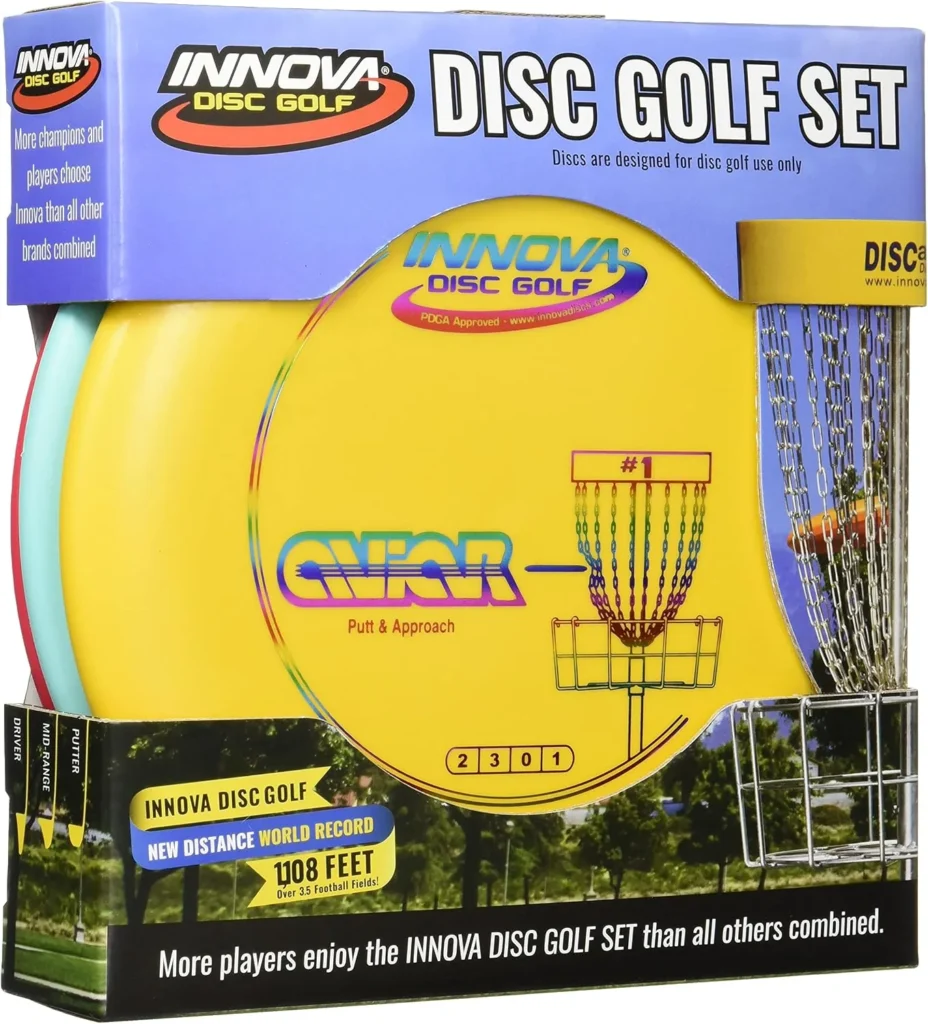
Short answer: start with a putter, a midrange and a fairway-speed driver in a light, grippy plastic. A three-disc starter set is a convenient way to buy all three together.
The four disc types each do a different job. Beginners do best with slower, high-glide discs, because fast distance drivers need a lot of arm speed to fly as designed.
The Innova set below contains a driver, a midrange and a putter in DX plastic, which the listing describes as made in beginner weights:

It had more than 8,500 ratings when we checked on October 10, 2026. We hid its card bullets because they include a PDGA approval claim we couldn’t verify. If you’d rather compare several sets, see our best disc golf set guide.
Step 2: Find a course near you
Many disc golf courses are in public parks, and many are free to play; check each course’s fees and access rules. The UDisc course map listed more than 17,000 courses worldwide when we checked in October 2026, per UDisc, with filters for difficulty, length and cost.
Look for a course marked as shorter or beginner-friendly for your first round. Long, wooded courses are fun later, but they eat discs and patience when you’re new.
Step 3: Learn how a hole works
Short answer: throw from the tee, walk to where your disc landed, throw again from there, and repeat until your disc is in the basket.
- Tee pad: where every hole starts. Your first throw is your drive.
- Fairway: the open path to the basket. Your throws after the drive are fairway shots and approaches.
- Your lie: the spot just behind where your disc came to rest (or behind the marker you place there). Your next throw starts from there.
- Basket: the target. The hole is finished when your disc comes to rest supported by the basket’s tray or by the chains below the chain support. Hitting the chains and bouncing out, or landing on top of the basket, doesn’t count.
- Par: the expected score for an expert playing the hole without errors. Use the par posted on the tee sign; many holes are par 3, and longer holes can be par 4 or 5.
Pro Tip: on your first rounds, try the shorter tee if a hole has two. Shorter holes make early rounds more manageable and may mean fewer lost discs.
Step 4: Keep score
Count every throw on every hole, plus any penalty throws. Your score for the round is the total of all holes. Most players also track it against par: a 3 on a par 3 is “par,” a 2 is a “birdie,” and a 4 is a “bogey.”
Many players keep score on their phone with a scoring app; UDisc has one built in. A pencil and the course scorecard work too.
Step 5: Learn three basic throws
Backhand
The throw most people try first. Reach the disc back across your body and pull it through in a smooth, straight line. For a first, level throw, keep the disc fairly flat at release; release height and angle change with the shot. Smooth form usually matters more than throwing hard.
Forehand (sidearm)
Thrown like skipping a stone, with two fingers against the inside of the rim. It’s useful when a hole curves the other way from your backhand.
Putt
Short, controlled throws at the basket from close range, usually with a putter. Many beginners push the disc straight toward the chains with a firm follow-through. A grippy, stable putter makes this easier to learn:
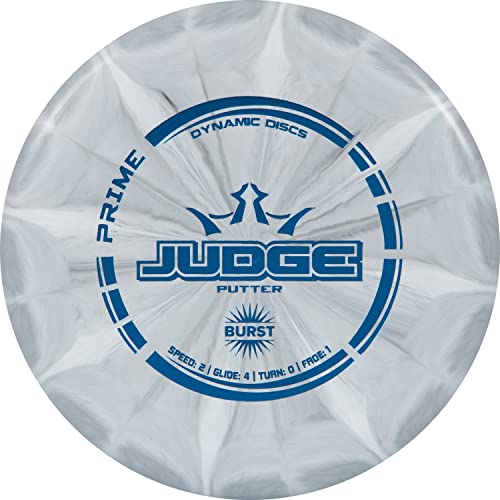
- Dynamic Discs Judge Disc Golf Putter was named the 2013 Disc of the Year in the Player’s Choice Awards for its incredibl…
- Prime Burst Judge: Fantastic throwing disc golf putter, will fly straight while combining the ability to handle high spe…
- Speed: 2 Glide: 4 Turn: 0 Fade: 1, stamp color will vary, with disc weight will be 170g+
The Judge is rated 2 / 4 / 0 / 1 (speed, glide, turn, fade) on its listing and had more than 1,000 ratings when we checked on October 10, 2026. Our Judge putter review goes deeper.
Step 6: Know the rules beginners trip over
Short answer: throw from your lie, keep a foot behind your marker when you release, take turns, and play out-of-bounds areas as marked. The PDGA publishes the official rules; casual rounds are usually more relaxed.
- Throwing order: after the first hole, the player with the lowest score on the last hole throws first from the tee. After the drives, the player farthest from the basket usually throws next. Casual groups often just play when ready, as long as it’s safe.
- Marking your lie: leave your disc where it landed, or place a small mini disc touching the front of it (on the line toward the basket) before you pick it up. When you throw, keep at least one foot or other support point on the spot just behind the marker, and none closer to the basket.
- Out of bounds (OB): water, roads and other areas count as OB only when the course marks them that way, and the boundary line itself is OB. An OB throw adds one penalty throw. Under PDGA rules you then usually play from your previous lie, from up to one meter inside where the disc was last in bounds, or from a drop zone if the course has one. Check the signs at the course.
- Mandatories (“mandos”): some holes have an arrow sign telling you which side of a tree or post your disc must pass. Missing one adds a penalty throw, and you usually play from a drop zone or your previous lie.
Step 7: Play safe and be polite
- Wait until it’s clear. Don’t throw until the group ahead is out of range. A disc can hurt someone.
- Yell “Fore!” if your throw heads toward anyone.
- Let faster groups play through in casual rounds when it’s safe. In tournaments, follow the event’s instructions.
- Stay quiet and still while someone else is throwing.
- Write your name and phone number on your discs. Lost discs often come back.
Step 8: Carry your discs
Once you have more than two or three discs, a bag frees up your hands and keeps water, scorecard and keys together. A backpack bag like the Dynamic Discs Trooper holds 18 or more discs, per its listing:

- SPACIOUS AND LIGHTWEIGHT: The Dynamic Discs Trooper Backpack for disc golf is designed to hold 18+ discs, providing a li…
- ORGANIZED STORAGE: This disc golf backpack features a main compartment for discs, an upper pocket for extra gear like cl…
- DURABLE DESIGN: Built with strong nylon, this disc golf bag includes padded shoulder straps and a supportive back panel,…
It had nearly 9,000 ratings when we checked on October 10, 2026. Our best disc golf bag guide compares more options, from small starter bags to larger backpacks.
Step 9: Practice putting at home
Putting is a skill you can practice at home, and short putts add up over a round. A portable basket lets you work on short putts without driving to a course:

- 24 LIGHTWEIGHT CHAINS – this disc golf basket has 24 equidistantly oriented, light-weighted chains for better catches du…
- PORTABLE & COMPACT – lightweight, collapsible, and easy to transport, this disc golf basket can be quickly assembled or …
- ENGINEERED FOR EASY ASSEMBLY – the Black Hole Lite disc golf basket includes 6 pieces (base, lower pole, cage, upper pol…
The Black Hole Lite has 24 practice-weighted chains and weighs 26 pounds, per its spec table. Our best disc golf basket guide compares more practice baskets, including heavier and lighter ones.
Black Friday tip: a starter set, a putter or a basket makes an easy gift for someone new to disc golf. Check the current price on each listing, and check the delivery date if it’s a gift.
Frequently asked questions
How do you play frisbee golf for beginners?
Throw from the tee toward the basket, then throw again from wherever your disc lands until it comes to rest in the basket. Count every throw. Start with a putter, a midrange and a slower driver, and pick a short course for your first round.
Do you need special discs for frisbee golf?
You can play casually with a catch frisbee, but golf discs are shaped for putting, approaches and drives. A three-disc starter set covers the basics.
How long does a round of disc golf take?
It depends on the course, your group and how busy it is. A short 9-hole course can be quick, while 18 holes often takes one to two hours or more.
Is disc golf free?
Many public courses are free, though some private or resort courses charge a fee. The UDisc course map lets you filter by cost.
What does par mean in disc golf?
Par is the expected score for an expert playing the hole without errors. Use the posted par: many holes are par 3, and longer holes can be par 4 or 5.
Our verdict
Frisbee golf is inexpensive to try: find a course on a course map, bring a putter, a midrange and a slow driver, count your throws and wait for the group ahead to clear. Add a bag when you outgrow your hands, and a backyard basket when you want more putting practice.
Ready for the next step? See our best disc golf driver picks once you’re throwing your fairway driver straight.