
As an Amazon Associate, DiscRated earns from qualifying purchases. Some links on this page are affiliate links, at no extra cost to you.
If you’ve spent any time reading putter reviews, you’ve probably noticed writers mentioning the “bead” like everyone already knows what it means. They don’t always explain it, and it trips up a lot of newer players. Let’s fix that.
This isn’t a hands-on field test – it’s a breakdown built from how these rim shapes are designed and manufactured, cross-checked against how real players actually describe throwing them. By the end, you’ll know which style fits your putting style and why.
What “Bead” Actually Means on a Disc
The bead is a small ridge or lip molded into the underside of the rim, usually near where your fingers curl when you grip the disc. It’s not decorative. It changes how the disc sits in your hand and how the plastic distributes weight along the rim.
A beaded putter has that ridge. A beadless putter has a rim that tapers or rounds smoothly from the flight plate down to the bottom edge, with no lip to catch your fingers on.
Why Manufacturers Add a Bead At All
Beads exist mostly for mold consistency and feel, not for some magic flight advantage. That said, the bead does give your fingers something concrete to register during the release, which many players use as a cue for spin and grip pressure.
Beadless designs remove that cue on purpose. Companies market beadless putters as having a “warmer” or softer in-hand feel, and a lot of players say the release feels smoother because there’s nothing catching on your fingers as the disc leaves your hand.
Beaded Putters: What You’re Actually Getting
Beaded putters tend to be associated with a firmer, more defined grip point. Players who throw with a lot of spin or who putt with a stacked, straight-on grip often like having that edge to press against.
Because the bead adds a bit of rim mass in a specific spot, some players also report beaded putters feeling slightly more stable in flight compared to a beadless version of a similar mold. This isn’t universal across every brand, but it’s a common theme in player feedback.
Who Beaded Putters Are Good For
- Players who like a tactile reference point during their release
- Players who throw with higher spin and want a firmer grip anchor
- Players who tend to throw putters slightly understable and want a touch more stability
Who Beaded Putters Are NOT For
If you have a soft, low-spin putting stroke, or if you’ve ever felt a bead “bite” into your fingers uncomfortably on the release, a beaded putter can feel harsh rather than helpful. Some players also find the bead makes the disc feel less predictable on quick, flat releases because the ridge interrupts a smooth roll-off of the fingers.
Beadless Putters: What You’re Actually Getting
Beadless putters are built around a continuous, rounded rim. The main appeal players report is a smoother in-hand feel and a release that doesn’t have any interruption as the disc rolls off your fingers.
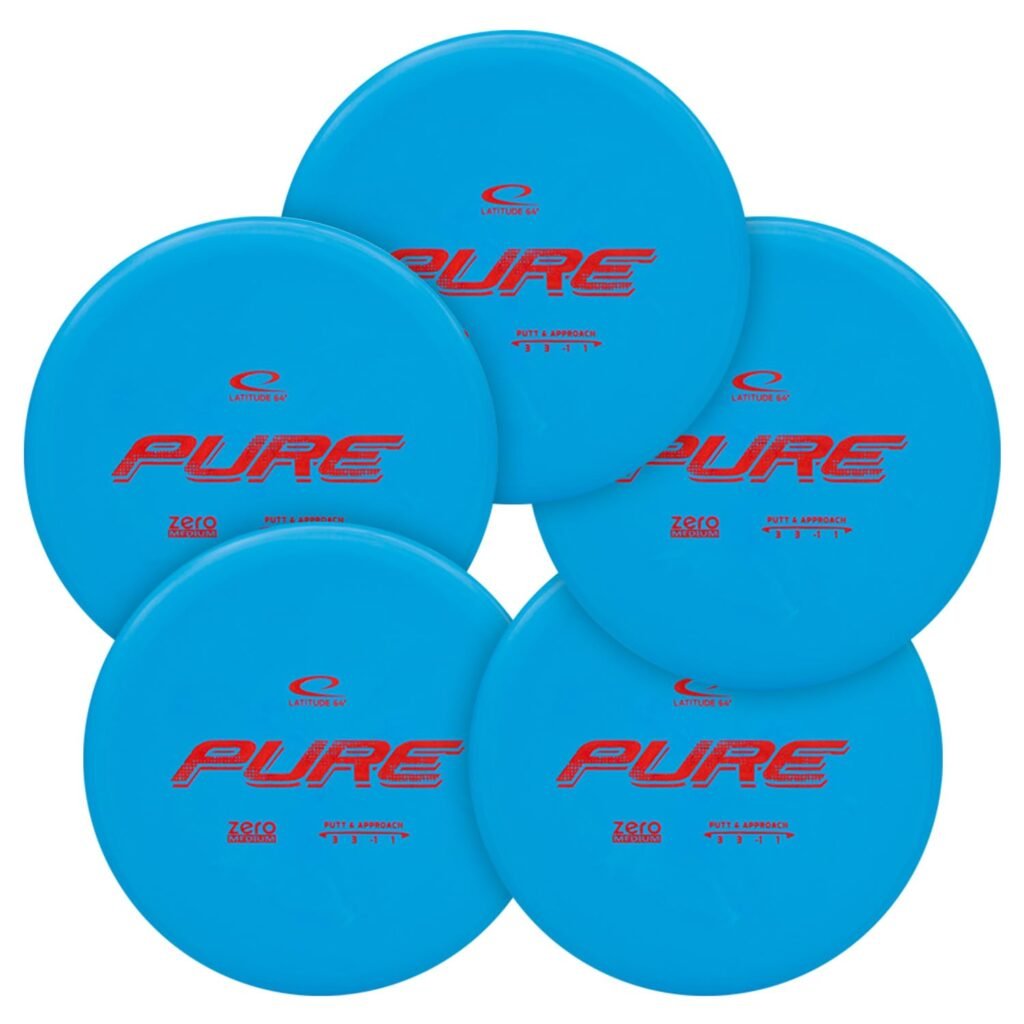
Our Latitude 64 Pure review covers one of the more well-known beadless designs in detail, including why so many players default to a beadless putter for their primary putt-and-approach disc.
Who Beadless Putters Are Good For
- Players who putt with a relaxed, low-spin release
- Players who prefer a softer, more “gummy” in-hand feel
- Players who throw a lot of push putts or spin putts and want minimal friction on release
Who Beadless Putters Are NOT For
If you rely on rim feedback to time your release, a beadless putter can feel vague at first – there’s no ridge telling your fingers exactly where the disc is sitting. Some players also find beadless putters less forgiving on longer upshots where a bit of extra rim stability would’ve helped hold the line.
Does Beaded vs Beadless Actually Change Flight Numbers?
Short answer: not directly. Speed, Glide, Turn, and Fade are published by the manufacturer based on the mold’s overall shape and rim profile, not the presence of a bead by itself. A beaded and beadless version of the exact same mold will often carry identical or nearly identical flight numbers on paper.
Where the difference shows up is in real-world flight behavior tied to release quality. Because the bead changes how confidently you can grip and spin the disc, a lot of players report their beaded putters flying slightly more consistently stable, while beadless putters can feel a touch more prone to turning over if your release isn’t clean. That’s a feel-and-technique effect, not a change in the disc’s stated ratings.
Beaded vs Beadless: Quick Reference
| Factor | Beaded | Beadless |
|---|---|---|
| Rim feel | Firm, defined edge | Smooth, rounded |
| Release cue | Tactile ridge to grip against | No interruption, smoother roll-off |
| Best suited for | Higher-spin, aggressive releases | Relaxed, low-spin releases |
| Common complaint | Bead can bite fingers on some grips | Can feel vague without a reference point |
| Flight numbers | Set by mold shape, not the bead itself | Set by mold shape, not the bead itself |
How to Actually Decide Which One You Need
The honest way to figure this out is to grip both styles and pay attention to your fingers, not your eyes. Hold a beaded putter with your normal putting grip and notice where the ridge sits against your fingers – does it feel like a helpful anchor, or does it feel like it’s in the way?
Then do the same with a beadless putter. If the smooth rim feels more natural and your release feels cleaner, that’s your signal. A lot of players actually carry both – a beaded putter for aggressive upshots where they want stability, and a beadless putter for close-range putting where feel matters more than firmness.
If you’re building out your putter lineup and want a reference point for a widely used, historically dominant beaded mold, our Innova DX Aviar review is a good place to see how a classic beaded rim performs across different conditions. And if wind-fighting approach shots are more your concern than short putting feel, the Discraft Zone review covers a beaded overstable option built specifically for that job.
FAQ
Is a beaded or beadless putter better for beginners?
There’s no universal answer, but a lot of beginners find beadless putters more comfortable at first because there’s nothing catching on the fingers during a still-developing release. That said, plenty of beginners do just fine with a beaded putter – it really comes down to your natural grip.
Do beaded putters fly differently than beadless putters of the same mold?
The manufacturer-published flight numbers are typically the same or nearly the same for beaded and beadless versions of an identical mold, since the numbers are based on the rim shape and profile rather than the bead alone. Real-world flight differences you might notice usually come down to release consistency, not the bead itself changing the disc’s inherent stability.
Can I switch from beaded to beadless without hurting my putting?
Most players can switch with a short adjustment period. Give yourself a handful of practice sessions focusing purely on your grip and release before judging whether the switch is working for you.
Should I carry both beaded and beadless putters in my bag?
A lot of experienced players do exactly this – a beaded putter for upshots and longer putts where they want a firmer stability, and a beadless putter for close-range comfort. It’s a reasonable way to cover both preferences without overcommitting to one rim style.
Flight-number definitions (Speed, Glide, Turn, Fade) follow the standard published by the Professional Disc Golf Association, disc golf’s official governing body.